
| Last date for submission | 2026-09-01 |
| Category | Arabic Language and Literature |
| ISSN | ISSN (print) 1658-9572 ISSN(online) 2961-4066 |
| 00966500205551 | @ConferenceCt |

The International Journal for Arabic Language and Literature is a peer-reviewed quarterly scientific journal dedicated to publishing original research and scholarly studies in the fields of Arabic language, Arabic literature, and related disciplines. Published by: Ithra Elmarafa for Conferences, Researches and Scientific Publish, Taif, Kingdom of Saudi Arabia.
To advance the standards of scientific publishing at both the national and international levels in the field of Arabic language and literature, striving to achieve excellence in scholarly research and academic publishing.
The journal is committed to advancing and strengthening scientific research, with the aim of becoming a distinguished scholarly reference for researchers across the diverse fields of Arabic language and literature.
1. To establish a specialized academic reference in the fields of Arabic language and literature. 2. To meet the needs of researchers at the local, regional, and international levels in the fields of Arabic language and literature. 3. To promote and advance scientific research by publishing distinguished studies and original research in the disciplines covered by the journal, in line with the objectives of the Center. 4. To enrich Arabic and international libraries with specialized studies and scholarly research in the fields within the journal's scope. Scope The International Journal for Arabic Language and Literature publish original scientific research in both Arabic and English. The journal welcomes submissions from researchers around the world in the following fields:
The International Journal for Arabic Language and Literature publish original scholarly research that complies with its publication policies and meets the following requirements: 1. The journal publishes original and innovative research in the fields of Arabic language, Arabic literature, and related disciplines, in both Arabic and English. Each manuscript must include an abstract of no more than 200 words, accompanied by a translation into English (for manuscripts written in Arabic) or Arabic (for manuscripts written in English). 2. Manuscripts and all required documents must be submitted through the "Submit Your Manuscript" link available on the journal's website. 3. Authors are required to upload their manuscripts in Microsoft Word format and adhere to the journal's formatting requirements: o Arabic manuscripts: Times New Roman, 14 pt for the main text and 10 pt for footnotes. o English manuscripts: Calibri, 12 pt for the main text and 10 pt for footnotes. 4. Manuscripts should contain 6,000–10,000 words. 5. The first page of the manuscript should include the author's full name, academic rank, institutional affiliation, and email address. 6. Authors must provide a complete list of all references cited in the manuscript, translated into English. 7. Submitted manuscripts must not have been published previously, either in whole or in part, in a book, journal, conference proceedings, or any other publication, nor be under consideration elsewhere. Authors are required to submit a signed declaration confirming the originality of the manuscript and affirming that it will not be submitted to another journal before the completion of the peer-review process. 8. Once a manuscript has been accepted for publication, the author may not republish it, in whole or in part, elsewhere without obtaining written permission from the Editor-in-Chief and only after three years have elapsed from its official publication in the journal. 9. The Editorial Board reserves the right to request the deletion or modification of any part of the manuscript to ensure compliance with the journal's publication policies. 10. All publication rights are reserved by the journal. The journal also reserves the right to republish the article, in whole or in part, and to translate it into any language, subject to obtaining the author's consent. Disclaimer: The opinions and views expressed in published articles are solely those of the authors and do not necessarily reflect the views of the Editorial Board or the publisher. Accordingly, the Editorial Board assumes no responsibility for the content of published works.
| edition | Download | Date | Research |
|---|---|---|---|
| Special issue Makkah International Conference on Arabic Language and Literature: Arabic Language and Sciences | 2023-12-31 | ||
| Special issue The Sixth Makkah International Conference on Arabic Language and Literature: Arabic Language and the Challenges of Digitization | 2025-01-05 | ||
| Special issue The Seventh International Conference on the Arabic and its Literature: The Arabic and Future Horizons | 2025-09-07 | ||
| Special issue The 8 th International Conference on the Arabic and Literature: Language from Communication to Knowledge Innovation and Literary Creativity | 2026-02-08 |

أستاذ البلاغة والنقد بكلية اللغة العربية وآدابها - جامعة ام القرى- المملكة العربية السعودية
رئيس التحرير

أستاذ اللغة والنحو والصرف المساعد بجامعة الملك فهد للبترول والمعادن بالظهران
مدير التحرير

أستاذ النحو والصرف وفقه اللغة بكلية اللغة العربية - جامعة الإمام محمد بن سعود الإسلامية
عضو هيئة التحرير

أستاذ الأدب بكلية اللغة العربية - جامعة الإمام محمد بن سعود الإسلامية
عضو هيئة التحرير

أستاذ الأدب والنقد والبلاغة بجامعة أم القرى
عضو هيئة التحرير

أستاذ اللغويات بجامعة جدة
عضو هيئة التحرير

أستاذ النقد الحديث بجامعة الإمام محمد بن سعود الإسلامية
Advisory Board Member

أستاذ النحو والصرف بجامعة القصيم
Advisory Board Member

أستاذ الأدب والنقد والبلاغة بجامعة العلوم والتكنولوجيا - الأردن
Advisory Board Member
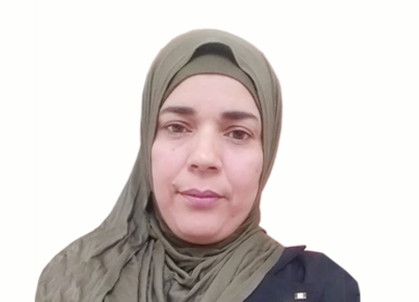
ستاذ اللسانيات وتحليل الخطاب بجامعة بسكرة - الجزائر
Advisory Board Member

أستاذ فقه اللغة والصوتيات المشارك بجامعة الملك فهد للبترول والمعادن
Advisory Board Member

أستاذ الأدب العربي المشارك بجامعة الإسكندرية وجامعة زايد - الأمارات (إعارة)
Advisory Board Member

الأستاذ المساعد في كلّيّة الدّراسات متداخلة التّخصّصات بجامعة زايد_ الإمارات العربيّة المتّحدة.
Advisory Board Member

رئيس قسم اللغة العربية وآدابها بجامعة محمد بن زايد للعلوم الإنسانية
Advisory Board Member
Research Paper Review Procedure 1. All manuscripts submitted to The International Journal for Arabic Language and Literature undergo a double-blind peer review process. 2. Submitted manuscripts are initially screened by the Editorial Board to determine whether they comply with the journal’s submission and publication guidelines and are suitable for peer review. The Editor-in-Chief may reject a manuscript at this stage if it falls outside the journal’s scope or if its academic quality is considered insufficient for external review. 3. Manuscripts that pass the preliminary screening are sent to at least two independent expert reviewers specializing in the subject area. Reviewers are selected from different institutions and, where possible, different countries. They evaluate whether the manuscript should be: o Accepted without revision; o Accepted subject to minor revisions; o Reconsidered after major revisions; or o Rejected. 4. The Editor-in-Chief forwards the reviewers’ reports to the author(s), requesting the necessary revisions in accordance with the reviewers’ comments. 5. Rejection letters are sent to authors whose manuscripts are not accepted for publication. 6. The peer review process is normally completed within two weeks. Guidelines for Reviewers 1. The International Journal of Arabic Language and Literature follows a double-blind peer review policy. This process assists the Editor-in-Chief and the Editorial Board in making informed editorial decisions and provides authors with constructive feedback to improve their manuscripts. 2. Reviewers are not required to evaluate manuscripts that fall outside their areas of expertise. 3. Any external reviewer who considers themselves unqualified to review a submitted manuscript must promptly inform the Editor-in-Chief and withdraw from the review process. 4. All reviewers conducting peer review on behalf of the International Journal of Arabic Language and Literature are expected to understand and adhere to the confidentiality standards governing the review process. 5. Manuscripts received for review must be treated as confidential documents. Reviewers must not disclose, distribute, or discuss their contents with others except as authorized by the Editor-in-Chief. 6. Reviews must be conducted objectively. Reviewers should avoid personal criticism of the author(s) and express their evaluations clearly, providing well-reasoned and evidence-based comments. 7. Reviewers should notify the Editor-in-Chief of any substantial similarity or overlap between the manuscript under review and any published work of which they are aware. 8. Reviewers must not use any unpublished information, data, or ideas obtained through the peer review process for their personal benefit or that of others. 9. Reviewers should decline to review manuscripts in which they have any conflict of interest arising from competitive, collaborative, institutional, financial, or other relationships with the author(s). 10. The identities and institutional affiliations of reviewers must be maintained in a secure database that complies with applicable data protection and privacy standards.
Publication Frequency The International Journal of Educational Research and Development publishes four issues annually in both print and electronic formats: • January • April • July • October
سياسة crossmark
Policy Statement The International Journal of Arabic Language and Literature maintains a zero-tolerance policy toward plagiarism. To safeguard academic integrity and uphold the highest standards of scholarly publishing, the Journal has established the following policy, which outlines the procedures and actions to be taken when plagiarism is identified in a submitted manuscript. • Plagiarism is defined as the use or imitation of another author's language, ideas, data, or intellectual work and presenting them as one's own original work. • Manuscripts submitted for publication must be original, unpublished, and not under consideration by any other journal. Authors are required to clearly identify any material reproduced verbatim from another source by: 1. Using appropriate indentation where applicable; 2. Enclosing the copied text within quotation marks; and 3. Providing complete and accurate source citations. • Any reproduced text exceeding the limits of fair use (defined here as more than two or three consecutive sentences, or their equivalent), as well as any reproduced figures, tables, illustrations, or other graphical materials, requires prior permission from the copyright holder and, where possible, the original author. The original source must also be properly acknowledged. • All manuscripts submitted to the Journal are screened using plagiarism detection software to determine the similarity index before entering the peer-review process. • When plagiarism is confirmed, the Editor-in-Chief shall determine the appropriate editorial action based on the detected similarity index in accordance with the Journal’s plagiarism policy. Similarity Index Policy The International Journal of Arabic Language and Literature adopts a strict zero-tolerance approach to plagiarism. Editorial decisions are based on the similarity index generated by plagiarism detection software according to the following criteria: 1. Similarity Index above 40% o The manuscript will be rejected immediately due to excessive similarity resulting from improper citation or inadequate paraphrasing. o Such manuscripts are not eligible for resubmission. 2. Similarity Index between 15% and 40% o The manuscript will be returned to the author(s) for substantial revision in accordance with accepted standards of academic writing and proper citation practices. 3. Similarity Index below 15% o The manuscript may still require minor revisions, including improving paraphrasing and ensuring that all borrowed ideas or text are appropriately cited. 4. Requirements for Revised Manuscripts o For manuscripts falling under Categories (2) and (3), authors must carefully revise the manuscript, improve paraphrasing, add all necessary citations, and ensure that all externally sourced material is properly acknowledged. o Upon resubmission, authors must include an official plagiarism detection report demonstrating that the manuscript is free from plagiarism and that the final similarity index does not exceed 15%.
المراجع
Publication Requirements 1. The manuscript must be original and not previously published. Authors are required to submit a signed declaration confirming the originality of their work. 2. The manuscript must not be under consideration for publication in any other journal at the time of submission. 3. Once a manuscript has been accepted for publication in the International Journal of Arabic Language and Literature, it may not be published elsewhere without obtaining prior written permission from the Editor-in-Chief. 4. Authors agree to transfer the copyright of the accepted manuscript to the Journal. Should the Journal wish to republish the work in another format or edition, the author's prior written consent will be obtained. 5. Authors must disclose all sources of financial support or funding related to the research. 6. Upon publication, authors will receive an electronic copy (PDF offprint) of their published article. 7. Manuscripts submitted to the Journal will not be returned, whether accepted or rejected. Manuscript Preparation Requirements • Manuscripts should normally contain 6,000–10,000 words. • Each manuscript must include: o An abstract in both Arabic and English, with each abstract not exceeding 200 words. o A list of keywords reflecting the manuscript's specific field of study. o An introduction. o A well-organized main body divided into appropriate sections. o A conclusion. o A brief author biography. o A complete list of references. • The author's full name and current institutional affiliation should appear immediately below the title of the manuscript. • Manuscripts should be prepared using Times New Roman font: o 14-point font for the main text. o 12-point font for footnotes. • Text should be typed on one side of the page only with 1.5 line spacing. • Authors are responsible for ensuring careful proofreading before submission. • Figures, illustrations, and diagrams should be inserted within the text, prepared in black and white, numbered consecutively, and accompanied by captions placed beneath each figure. • Tables should also appear within the text, numbered consecutively, with titles placed above each table and explanatory notes, where necessary, placed below the table. • Footnotes should be used only when essential. Footnote and Citation Style Books References should be cited in the text using superscript consecutive numbers (e.g., ¹, ², ³), with full bibliographic details provided in the corresponding footnotes. The bibliographic entry should include: • Author's full name. • Title of the book (italicized for works published in European languages). • Name of the editor or translator (where applicable). • Place of publication. • Publisher. • Year of publication (Hijri and/or Gregorian, where applicable). • Edition number. • Volume number (if applicable). • Page number(s). For subsequent citations of the same source, a shortened form should be used, including the author's surname, a shortened title, volume number (if applicable), and page number. Journal Articles Journal references should include: • Author's full name. • Title of the article. • Journal title. • Year of publication. • Volume number. • Issue number. • Publishing institution (if applicable). • Inclusive page numbers. Book Chapters References to chapters in edited books should include: • Author's full name. • Chapter title. • The word In: followed by the book title. • Place of publication. • Publisher. • Year of publication. • Edition number (if applicable). • Inclusive page numbers. Hadith References When citing Prophetic Hadiths, references should be arranged in the following order: • Name of the Hadith collection. • Book title (e.g., Book of Prayer). • Chapter title (e.g., Chapter on Tarawih Prayer). • Volume number. • Page number. • Hadith number. Referencing Style (APA 7th Edition) The International Journal of Arabic Language and Literature adopts the APA (7th Edition) referencing style exclusively for both in-text citations and the reference list. In-Text Citations In-text citations should follow the APA (7th Edition) author-date format and be placed immediately after the cited or paraphrased material. Format: (Author's Surname, Year, p. Page Number) Example: (Yousef & Ahmed, 2020, p. 16) For works with three or more authors, use the first author's surname followed by et al. in accordance with APA 7 guidelines. The reference list should appear at the end of the manuscript and be arranged alphabetically by the surname of the first author. Books and Book Chapters Book – Single Author Format: Author's Surname, Initial(s). (Year). Title of the book (Edition, if not the first). Publisher. Example: Halabi, M. (2020). Contemporary Arabic Literature (2nd ed.). Dar Al-Maaref. Note: The first edition is not indicated. APA recommends using initials rather than writing the author's full first name. Book – Multiple Authors Format: Author's Surname, Initial(s)., & Author's Surname, Initial(s). (Year). Title of the book (Edition). Publisher. Example: Al-Muhairi, M., & Al-Najjar, A. (2021). Comparative Arabic Literature (3rd ed.). Dar Al-Fikr. Under APA 7, up to 20 authors should be listed in the reference list before using an ellipsis. Edited Book Format: Editor's Surname, Initial(s). (Ed.). (Year). Title of the book (Edition). Publisher. For multiple editors: Editor's Surname, Initial(s)., & Editor's Surname, Initial(s). (Eds.). (Year). Title of the book (Edition). Publisher. Chapter in an Edited Book Format: Author's Surname, Initial(s). (Year). Title of the chapter. In Editor's Initial(s). Editor's Surname (Ed.), Title of the book (Edition, pp. xx–xx). Publisher. Example: Al-Murabit, A. (2008). The meters of Arabic poetry. In A. Al-Rayhani (Ed.), Introduction to Arabic Literature (3rd ed., pp. 120–134). Al-Manarah Publishing. Journal Articles Format: Author's Surname, Initial(s). (Year). Title of the article. Journal Title, Volume(Issue), Page Range. https://doi.org/xxxxx Examples: Al-Rahmani, A. (2021). The artistic vision in the poetry of Al-Mutanabbi. Journal of Humanities, 19(2), 130–145. https://doi.org/10.1108/ITP-04-2014-0083 Al-Sarraj, I. (2022). Referencing methods. Adwaa Journal, 16(3), 19–35. When a DOI is available, it should always be included. If the article is retrieved from a website and no DOI exists, provide the direct URL without the phrase Retrieved from. Conference Papers Published Conference Proceedings Format: Author's Surname, Initial(s). (Year). Title of the paper. In Editor's Initial(s). Editor's Surname (Ed.), Title of the conference proceedings (pp. xx–xx). Publisher. https://doi.org/xxxxx Example: Mansour, F. (2017). Causes, manifestations, and prevention of addiction. In A. Zaki (Ed.), Proceedings of the Fifth Conference on Contemporary Social Issues (pp. 77–89). Dar Al-Maaref. https://doi.org/10.1007/978-981-10-4241-6_2 Unpublished Conference Paper Format: Author's Surname, Initial(s). (Year, Month). Title of the paper [Conference paper]. Conference Name. City, Country. URL (if available). Example: Abdullah, S. (2019, November). Criminal law in Bahrain [Conference paper]. Tenth Conference on Criminal Law in Arab Countries. Riyadh, Saudi Arabia. https://bit.ly/37DvrHR Theses and Dissertations Published Thesis or Dissertation Format: Author's Surname, Initial(s). (Year). Title of the thesis or dissertation [Master's thesis or Doctoral dissertation, University Name]. Archive or Repository Name. URL (if available). Example: Abdul Hamid, T. (2020). Cybercrime law: A case study [Doctoral dissertation, University of Mosul]. URL Unpublished Thesis or Dissertation Format: Author's Surname, Initial(s). (Year). Title of the thesis or dissertation [Unpublished master's thesis or doctoral dissertation]. University Name. URL (if available). Example: Abu Shaqaf, K. A. A. (2025). Bullying and its relationship to self-acceptance among female secondary school students [Unpublished master's thesis]. Jazan University. General APA (7th Edition) Referencing Guidelines The International Journal of Arabic Language and Literature requires authors to adhere to the following general rules when preparing references in accordance with the APA (7th Edition) style: 1. The heading "References" should be centered on the page. 2. References should be arranged alphabetically by the surname of the first author and must not be numbered. 3. A single unified reference list should be provided at the end of the manuscript without categorizing sources by type. 4. Both the manuscript and the reference list should be formatted using double line spacing. 5. The abbreviation "pp." should be used only when citing: o A chapter in an edited book; or o Published conference proceedings. For journal articles, only the page range should be provided (e.g., 220–235). 6. Commas should be used only in the following situations: o Immediately after the journal title. o Between the volume/issue number and the page range (e.g., Knowledge World, 12(5), 23–25). o After the edition number in a book chapter citation (e.g., (3rd ed., pp. 112–130)). o Between the dissertation type and the university name (e.g., [Doctoral dissertation, University of Sharjah]). o After the author's surname (e.g., Al-Alawi, A.). 7. For unpublished theses and dissertations, the university name should appear outside the square brackets and be followed by a period rather than a comma. Example: [Unpublished master's thesis]. University of Khartoum. 8. The edition number should appear immediately after the book title in parentheses and should not be preceded by a period. Example: History of Science among Muslims (3rd ed.). Dar Al-Fikr. 9. The first edition should not be indicated. Only the second and subsequent editions should be specified. 10. For edited books, the editor's name should be followed by (Ed.) or (Eds.), then the publication year. Example: Al-Sarraj, A. (Ed.). (2018). 11. For translated or edited books, the translator or editor should be indicated immediately after the book title. Example: Introduction to Psychology (A. Al-Shamsi, Trans.). Dar Al-Fikr. (Original work published 2006). 12. If both an edition and a translator/editor are included, either of the following APA formats may be used: Linguistics (R. Al-Hilali, Ed.) (4th ed.). or Linguistics (R. Al-Hilali, Ed., 4th ed.). 13. If a journal has no issue number, only the italicized volume number should be provided. Example: Knowledge World Journal, 34, 97–113. 14. Italics should be used for: o Book titles. o Journal titles. o Theses and dissertations. o Journal volume numbers. o Titles of unpublished conference papers. Manuscript Preparation Requirements The International Journal of Arabic Language and Literature welcomes original research papers that demonstrate scholarly rigor, originality, and a meaningful contribution to the fields of Arabic language and literary studies. Manuscripts may be submitted in either Arabic or English, provided that the following requirements are met: 1. Each manuscript must include two abstracts, one in Arabic and one in English, each not exceeding one page, followed by five keywords. 2. The first page should include: o The title of the manuscript. o The name(s) of the author(s). o The institutional affiliation(s) of the author(s). 3. Submitted manuscripts must not have been previously published or submitted for publication elsewhere, including journals, conference proceedings, or other publishing venues. The manuscript must not be extracted from a published book or an approved master's or doctoral thesis. Authors must submit a signed declaration confirming these conditions. 4. Authors are expected to uphold the highest standards of academic integrity. The Journal assumes no responsibility for violations of research ethics or academic misconduct committed by authors. 5. Manuscripts should follow internationally recognized standards of scholarly writing and include: o An introduction. o Clearly stated research objectives. o Research methodology. o A well-organized structure. o Accurate citation and referencing. o A conclusion summarizing the principal findings and recommendations. o A complete alphabetical reference list prepared according to the APA (7th Edition) style. 6. Manuscripts must be submitted in both Microsoft Word (.doc/.docx) and PDF formats. 7. Manuscripts should be between 20 and 50 A4 pages in length. 8. Formatting requirements: o Arabic manuscripts: Times New Roman, 14-point for the main text and 12-point for footnotes. o English manuscripts: Calibri, 14-point for the main text and 12-point for footnotes. 9. Footnotes should appear at the bottom of each page and be numbered consecutively throughout the manuscript. 10. Manuscripts that have not undergone thorough linguistic proofreading in either Arabic or English will not be considered for publication. Publication Procedures The publication process of the International Journal of Arabic Language and Literature follows a structured workflow to ensure fairness, transparency, and academic quality. 1. Manuscripts must be submitted electronically through the "Submit Your Manuscript" link available on the Journal's website. 2. All correspondence between authors and the Journal should be addressed to the Journal Secretariat. 3. Authors must submit a brief biographical note together with their manuscript submission. 4. Every submitted manuscript is screened using plagiarism detection software. The overall similarity index must not exceed 15%. Manuscripts exceeding this threshold will not be considered for publication. 5. Following submission, the Editor-in-Chief forwards eligible manuscripts to the Scientific Publishing Committee for an initial evaluation to ensure consistency with the Journal's aims and scope. If deemed suitable, the Committee appoints qualified peer reviewers with expertise in the manuscript's subject area. 6. All submitted manuscripts and the corresponding peer-review reports are treated with the highest level of confidentiality throughout the editorial process. 7. The Managing Editor sends the author copies of the reviewers' reports together with an official editorial letter from the Editor-in-Chief detailing the required revisions, where applicable. Authors are normally given no more than one month from the date of receiving the notification to complete the requested revisions. 8. Authors must submit the revised manuscript together with a detailed response-to-reviewers document explaining how each reviewer comment has been addressed within the specified revision period. 9. The Editor-in-Chief forwards the revised manuscript, the author's response document, and the reviewers' reports to the Scientific Publishing Committee for verification that all required revisions have been satisfactorily completed. Upon approval, the manuscript proceeds to the production stage for copyediting, typesetting, and publication. 10. Based on the recommendation of the Scientific Publishing Committee, the Managing Editor formally notifies the author, on behalf of the Editor-in-Chief, whether the manuscript has been accepted or rejected. 11. Upon acceptance, authors receive an official Letter of Acceptance issued by the Journal and delivered electronically via email. 12. Articles published in the Journal may not be republished in another journal or included in conference proceedings without prior written permission from the Journal. 13. After publication, authors receive one printed copy of the journal issue containing their article, in addition to an electronic PDF offprint of their published paper. 14. In addition to the printed edition, the Editorial Board reserves the right to publish all journal issues electronically on the International Journal of Arabic Language and Literature website.
Processing Charge The peer-review and publication fee is USD 400 (equivalent to SAR 1,500). Payment is required after the initial acceptance of the manuscript.
The International Journal of Arabic Language and Literature adheres to the Code of Conduct and Best Practice Guidelines for Journal Editors issued by the Committee on Publication Ethics (COPE). The Journal is committed to maintaining the highest standards of integrity, transparency, and ethical conduct throughout the scholarly publishing process. Further information regarding COPE's publication ethics guidelines is available at: https://publicationethics.org The Journal fully supports the principles and best practices established by COPE and implements all necessary measures to prevent and address any form of publication misconduct. Editorial oversight is maintained throughout every stage of the submission, peer-review, editorial, and publication processes. Accordingly, preventing publication malpractice—including plagiarism, improper citation, copyright infringement, duplicate publication, and any other unethical publishing practices—is considered a fundamental responsibility of the Editorial Board. The Journal maintains a zero-tolerance policy toward any breach of publication ethics and fully recognizes its ethical obligations to authors, reviewers, readers, and the wider academic community. A. Responsibilities of the Editor-in-Chief The Editorial Board of the International Journal of Arabic Language and Literature consists of recognized scholars with expertise in the Journal's academic disciplines. The Editor-in-Chief is responsible for publishing the names, institutional affiliations, and contact information of Editorial Board members on the Journal's official website. The Editor-in-Chief has the following responsibilities: Editorial Decisions 1. The Editor-in-Chief bears ultimate responsibility for all editorial decisions, including manuscript handling, peer review, requests for major or minor revisions, acceptance, and rejection. 2. Publication decisions are based on the reviewers' recommendations together with the manuscript's scientific merit, originality, clarity, significance, and relevance to the Journal's aims and scope. 3. Where appropriate, the Editor-in-Chief may consult Associate Editors, Editorial Board members, or additional subject specialists before reaching a final editorial decision. 4. Editorial decisions shall also take into consideration all relevant legal and ethical issues, including defamation, copyright infringement, plagiarism, research integrity, and intellectual property rights. Confidentiality 1. The Editor-in-Chief and all members of the Editorial Board must treat all submitted manuscripts as confidential documents. Information concerning a submitted manuscript must not be disclosed to anyone other than the corresponding author, assigned reviewers, prospective reviewers, editorial advisers, or the publisher, as appropriate. 2. The peer-review process is conducted under strict confidentiality, and the Journal is fully committed to maintaining a double-blind peer-review system throughout the evaluation process. Fair and Transparent Peer Review 1. The Editor-in-Chief shall evaluate submitted manuscripts solely on their academic merit, without discrimination based on the authors' race, ethnicity, gender, nationality, religious beliefs, political views, institutional affiliation, or any other personal characteristics. 2. Decisions regarding acceptance or rejection shall be based exclusively on the scholarly importance, originality, clarity, methodological quality, and relevance of the manuscript to the Journal's objectives and disciplinary scope. 3. The Editor-in-Chief may, where appropriate, allow authors to recommend potential reviewers or identify reviewers whom they believe should not be invited, provided that the final selection of reviewers remains entirely at the Journal's discretion. Electronic Archiving 1. The Editor-in-Chief shall ensure that all published content is permanently archived electronically and made available through the Journal's official website. Disclosure, Research Integrity, and Conflicts of Interest 1. The Editor-in-Chief and members of the Editorial Board must not use unpublished materials, data, or ideas disclosed in submitted manuscripts for their own research without obtaining the author's prior written consent. 2. Innovative ideas, confidential information, and unpublished data obtained through the peer-review process must be treated as strictly confidential and must never be used for personal or professional advantage. 3. The Editor-in-Chief shall require reviewers to disclose any actual or potential conflicts of interest when accepting a review invitation and when submitting their review reports. Reviewers who are unable to provide an impartial assessment due to a conflict of interest must decline the review assignment. 4. Original manuscripts submitted by authors who have co-authored publications with the Editor-in-Chief within the previous three years shall be handled independently by a Guest Editor or an independent Editorial Adviser to ensure an unbiased review process. 5. Authors must disclose any actual or potential conflicts of interest at the time of submission and promptly notify the Journal if any conflict is identified after publication so that appropriate corrective action may be taken. Procedures for Addressing Publication Misconduct 1. Any suspected publication misconduct identified before, during, or after the peer-review process must be reported immediately to the Editor-in-Chief. 2. Individuals reporting suspected misconduct should provide sufficient evidence and supporting documentation to enable a fair and objective investigation. 3. Upon receiving a complaint, the Editor-in-Chief shall initiate a prompt investigation and treat all allegations seriously until a decision is reached based on clear and verifiable evidence. 4. Allegations of publication misconduct may be investigated regardless of the length of time that has elapsed since publication. 5. Where a breach of publication ethics is confirmed, the Editor-in-Chief, in consultation with the Publisher, shall notify the author in writing and provide an opportunity to respond to the allegations before a final decision is made. 6. Minor ethical concerns may be resolved internally by the Editor-in-Chief without involving external organizations. 7. In cases of serious misconduct, the Editor-in-Chief may refer the matter to the relevant academic institution, research organization, or other competent authority for further investigation and evaluation. 8. Depending on the severity of the misconduct, corrective actions may include: o Issuing a formal notice describing the ethical violation. o Sending an official notification to the author's or reviewer's department head or to the research funding body. o Retracting the published article and informing the relevant institution of the retraction decision. o Permanently removing the author or reviewer from the Journal's database of contributors and reviewers. B. Responsibilities of Authors Compliance with the Journal's Publication Policies 1. Authors must comply with all manuscript submission requirements, editorial policies, and publication ethics established by the International Journal of Arabic Language and Literature, as well as internationally accepted standards of research integrity. 2. Authors must confirm that they satisfy the Journal's authorship criteria and that all listed authors have made appropriate scholarly contributions. 3. Authors of original research articles should present an accurate, objective, and comprehensive account of their work together with an appropriate interpretation of its scholarly significance. 4. Manuscripts should include sufficient methodological details, supporting information, and complete references to enable other researchers to understand, evaluate, and appropriately cite the work. Responsible Authorship 1. Authors must refrain from all forms of research misconduct, including plagiarism, fabrication, falsification, and data manipulation. 2. Authors must not submit the same manuscript simultaneously to more than one journal. 3. Authors may be requested to provide the original research data or supporting materials during the peer-review process and should be prepared to make such information available when appropriate, subject to ethical and legal considerations. 4. Authors must submit original scholarly work and provide appropriate acknowledgment and citation for the contributions, ideas, or findings of others. All publications that have significantly influenced the submitted research should be properly cited. 5. The corresponding author must confirm that all co-authors have made substantial contributions to the research and have reviewed and approved the final version of the manuscript prior to submission. 6. If an author discovers a significant error or inaccuracy in a published article, the author has an ethical obligation to notify the Editor-in-Chief or the Publisher immediately and cooperate fully in correcting or retracting the publication where necessary. Copyright Policy Authors retain the copyright of their scholarly work. However, upon formal acceptance of the manuscript for publication, the publication rights are transferred to the International Journal of Arabic Language and Literature in accordance with the Journal's publication policy. Disclosure and Conflicts of Interest 1. Authors must disclose all sources of financial support and declare any actual or potential conflicts of interest, including financial, institutional, professional, or personal relationships that could influence, or reasonably be perceived to influence, the evaluation, interpretation, or publication of the submitted research. 2. If a conflict of interest arises or is identified during or after the peer-review process, authors must immediately notify the Editor-in-Chief or the Publisher so that appropriate action can be taken. C. Responsibilities of Reviewers Contribution to Editorial Decisions The International Journal of Arabic Language and Literature operates a double-blind peer-review system. Reviewers play a vital role in assisting the Editor-in-Chief in making editorial decisions and in helping authors improve the quality, clarity, and scholarly contribution of their manuscripts through constructive and objective review reports. Responsible Peer-Review Conduct 1. Reviewers should accept assignments only when the manuscript falls within their area of expertise. Any invited reviewer who lacks the necessary expertise or is unable to complete the review within the required timeframe should promptly inform the Editor-in-Chief and decline the invitation. 2. Reviewers must not use any unpublished information, ideas, or data obtained through the peer-review process for their own personal, academic, or professional benefit. 3. Reviewers must decline to review any manuscript where a real or perceived conflict of interest exists due to competitive, collaborative, institutional, financial, or other relationships with any of the authors. 4. Reviewers should notify the Editor-in-Chief of any substantial similarity or overlap between the manuscript under review and any published or submitted work of which they are aware. Confidentiality and Objectivity 1. All reviewers acting on behalf of the International Journal of Arabic Language and Literature must strictly comply with the confidentiality requirements governing the Journal's double-blind peer-review process. 2. Manuscripts received for review must be treated as confidential documents. They must not be shared with, discussed with, or disclosed to any third party without the prior authorization of the Editor-in-Chief. 3. Reviews must be conducted objectively, fairly, and professionally. Reviewers should avoid personal criticism of the author(s) and focus exclusively on the scholarly quality and scientific merit of the manuscript. 4. Reviewers are expected to provide clear, balanced, constructive, and evidence-based comments, supported by appropriate academic reasoning and specific recommendations whenever possible.